EDWARD'S LECTURE NOTES:
More notes at http://tanguay.info/learntracker
C O U R S E
The French Revolution
Peter McPhee, The University of Melbourne
 |
C O U R S E L E C T U R E What were People of 18th Century France Reading? Notes taken on August 22, 2014 by Edward Tanguay |
•
what were people in 18th century France reading?
•
Encyclopédie
•
this work had a price that only a thin section of society could hope to afford
•
Rousseau
•
his most radical and revolutionary works were not comparatively popular
•
Émile, ou De l’éducation
•
Du contrat social ou Principes du droit politique
•
Daniel Mornet in the 1900s reviewed 500 libraries of people from 18th century, found one copy of The Social Contract
•
most popular works
•
Julie, ou la nouvelle Héloïse
•
romantic novel of sensibilities, a novel of manners
•
we have no best seller lists from there 18th century
•
two kinds of books:
•
received full public permission from regime
•
received only tacit permission
•
included the more radical works
•
1980s Robert Darnton research on "bad books"
•
found that there was a pirate industry of producing inexpensive copies of revolutionary works outside of France and getting them into the borders
•
in Britain and Neuchâtel, Switzerland
•
looking at illegal books tells you want people really wanted to read
•
25,000 pirate editions of the Encyclopedie existed
•
not only cheap pirate editions shipped into France, but another genre of books
•
low-quality books with political and pornography themes
•
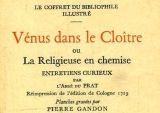
"Venus in the cloister, or the nun in the nightshirt"
•
the Falsity of Miracles
•
Social Contract (Rousseau)
•
one can conclude that people wanted to get their hands on obscenity, ribald literature, and banned Enlightenment works
•
the authorities tended to group these together and called them "bad books"
•
what was particularly explosive was that the obscene soft porn literature was targeting the noble class, the clergy, and indeed, the king himself
•
Louis XVI married Marie-Antoinette
•
he was 15, she was 14
•
under French Royal law, there can only be a king of France, not a Queen
•
it takes them 8 years to produce a child and it's a girl
•
finally in 1781 a son is born
•
he died in 1789
•
mockery of the king's sexual incapacity became politically explosive
•
not just the alleged impotency of the king but it suggests that the regime itself is in trouble
•
Marie Antoinette becomes a target of this mockery as well
•
these underground authors suggest in their writings that she is such a strong woman that she has effectively emasculated the king
•
this seems to symbolize what has gone wrong with the regime in general
•
since the king was there by the grace of God, this mockery was also religiously explosive
•
Louis is also mocked that he rather goes hunting than run his realm
•
he keeps a diary of the birds and animals that his hunting party kills, averaging 20-30 per day
•
on lists that were found of what bookstores ordered from foreign book producers, there were:
•
The Little Suppers at the Hôtel de Bouillon
•
"little suppers" were euphemisms for sexual orgies
•
Louis XV's private life
•
Louis XV's orgies
•
the devil in the baptismal font
•
Rousseau's latest book
•
Marie-Antoinette's hobbies
•
the allegation that comes through this literature is that the aristocracy can no longer fight, conduct foreign policy, nor make love
•
Chevalier d'Eon
•
commonly seen dressed as a woman
•
rumors that he cross-dressed
•
fought in the army
•
was a perfect occasion for these writers to mock the aristocracy and monarchy
•
Enlightenment writers such as Diderot would dabble in this type of ribald literature when they needed the money
•
Paris
•
literature is widely distributed
•
a literate city
•
the vast majority of people could read and write
•
women are less literate
•
information was commonly passed via market places
•
countryside
•
85% of France lived in small, rural communities
•
50% of men, 25% of women could sign their marriage acts
•
colporteurs went from village to village selling printed literature for people to read aloud at family gatherings
•
"Bibliotheque bleue"
•
medieval horror stories
•
witches, superstitions, spells
•
anything but Enlightenment literature
•
Almanach
•
secular information
•
e.g. how to watch out for pickpockets
•
rather than about the lives of the Saints
•
had nothing to do with the Enlightenment
•
hence one can conclude that the Enlightenment was an urban phenomenon
•
but one of the major movements of the French Revolution was The Great Fear, the fear of the peasant revolt
•
this can't be explained in terms of the peasants having Enlightenment ideas such as Rousseau or the Encyclopedie
•
the could afford these works
•
the illegal books weren't circulating to any significant extent through the countryside which were mocking the monarchy and the court